Saturday, August 26, 2017

Oral Antibacterial Therapy for Acne Vulgaris

Oral Antibacterial Therapy for Acne Vulgaris

An Evidence-Based Review

Amanda Bienenfeld; Arielle R. Nagler; Seth J. Orlow

DISCLOSURES 
Am J Clin Dermatol. 2017;18(4):469-490
 

Abstract

Background To some degree, acne vulgaris affects nearly every individual worldwide. Oral antibiotic therapy is routinely prescribed for the treatment of moderate to severe inflammatory acne; however, long-term use of oral antibiotics for acne may have unintended consequences.
Objective The aim of this study was to provide a systematic evaluation of the scientific evidence on the efficacy and appropriate use of oral antibiotics in the treatment of acne.
Methods A systematic search of MEDLINE was conducted to identify randomized controlled clinical trials, systematic reviews, and meta-analyses evaluating the efficacy of oral antibiotics for acne. Overall, 41 articles that examined oral antibiotics compared with placebo, another oral therapy, topical therapy, alternate dose, or duration were included in this study.
Results Tetracyclines, macrolides, and trimethoprim/sulfamethoxazole are effective and safe in the treatment of moderate to severe inflammatory acne. Superior efficacy of one type or class of antibiotic could not be determined, therefore the choice of antibiotic is generally based on the side-effect profile. Although different dosing regimens have been studied, there is a lack of standardized comparator trials to determine optimal dosing and duration of each oral antibiotic used in acne. The combination of oral antibiotics with a topical therapy is superior to oral antibiotics alone.
Conclusion This article provides a systematic evaluation of the scientific evidence of the efficacy of oral antibiotics for acne. Due to heterogeneity in the design of the trials, there is insufficient evidence to support one type, dose, or duration of oral antibiotic over another in terms of efficacy; however, due to increasing resistance to antibiotics, dermatologists should heed consensus guidelines for their appropriate use.

Monday, August 14, 2017

Can Adolescent Obesity Increase Risk for Midlife Stroke?

Authors: Sue Hughes; CME Author:Laurie Barclay, MD;
CME Released: 7/28/2017
 MEDSCAPE CLINICAL BRIEFING
For unknown reasons, stroke incidence has been increasing among young adults, in tandem with the obesity epidemic. High body mass index (BMI) in young adulthood, but not in prepubertal childhood, is a risk factor for stroke in men. However, previous studies have been limited by the availability of only 1 BMI measurement, precluding separation of the effects on stroke risk of BMI at childhood and of BMI increase through puberty and adolescence.
The goal of the population-based BMI Epidemiology Study (BEST) in Gothenburg, Sweden, was to evaluate the contribution of prepubertal childhood BMI and BMI change through puberty and adolescence to risk for adult stroke in men.
  • BMI increase through puberty and adolescence is a risk marker of adult stroke, based on findings from the BEST population-based study in Gothenberg, Sweden.
  • Higher BMI increases during puberty may contribute to greater risk for adult stroke at least partly via increased blood pressure.
  • Implications for the Healthcare Team: Avoiding excessive BMI increase during puberty may lower the risk for adult stroke; clinicians should consider monitoring adult blood pressure in men who had excessive BMI increase during puberty.
  • An accompanying editorial highlights the exponential increase in obesity in adolescents, which may predict serious health consequences later in life.
  • Because overweight children who normalized their BMI by age 20 years had no long-term increased risk for stroke, it is crucial that interventions target children and adolescents to prevent overweight and obesity in early adulthood.

Are all Penicillin Allergies in Children Real ?

Authors:Nicola M. Parry, DVM; CME Author: Charles P. Vega, MD
Medscape Clinical briefs 8/4/2017


Allergy to penicillin is 1 of the most common drug allergies encountered by clinicians, and the presence of penicillin allergy can significantly change prescribing patterns. This may result in the application of broad-spectrum antibiotics for common infections amenable to treatment with beta-lactam antibiotics.
The vast majority of patients with penicillin allergy never receive formal testing, in part because the gold standard for testing for penicillin allergy is laborious. 
  • Standard testing for penicillin allergy begins with a percutaneous skin test, followed by a second test at the more sensitive intracutaneous layer, and concludes with an oral drug challenge. Previous research has found that more than 90% of adults with penicillin allergy presenting to the ED had a negative result on skin testing.
  • The current study suggests a 17-item questionnaire completed by parents of children with a history of penicillin allergy can successfully identify children with a low risk for true allergy.
  • Implications for the Healthcare Team: Every new entry added to a patient's list of medication allergies is usually present for a very long time. The current study suggests we should look at the list of medication allergies more critically to avoid limiting therapeutic options for patients.


Friday, January 2, 2015

Surviving a Stampede

BEIJING, Jan. 2 (Xinhuanet) -- What do you do, if faced with a stampede like situation as in Shanghai?
Scientists have found that the combined force of 7 to 8 adults can reach well over 1000 pounds. To avoid getting hurt, the best choice for you is to leave the crowd at the first available opportunity.
But if you find you are already trapped, here are some basic rules to follow if you are packed in big crowd of people.
First, stay balanced and steady. Try to stay steady on your feet and do not try to pick up anything on the ground, including your wallet, cellphone or shoes.
Second, follow the crowd in the direction that it moves in, in small steps. Do not try to go past others or push them.
Third, quickly find buildings nearby and use them as s solid support. Don't forget to raise your arms and make room for you to breathe. Be aware, glasses and windows are what you need to stay away from.
Last but not the least, if you do fall down, you need to stay calm, lay sideways, curl up your body, and raise your arms to cover your head.

These tips should help you avoid direct damage to your head and major organs.

Monday, March 24, 2014

Green Tea, Coffee May Guard Against Stroke

Megan Brooks
April 03, 2013
Green tea and coffee consumption may help protect against stroke, according to a large Japanese population-based study.
The study showed that people who drank green tea or coffee regularly had about a 20% lower risk for stroke than their peers who seldom drank these beverages.
"This is the first large-scale study to examine the combined effects of both green tea and coffee on stroke risks," Yoshihiro Kokubo, MD, PhD, head of the Department of Preventive Cardiology, National Cerebral and Cardiovascular Center in Osaka, said in a statement.
Their findings were published online March 14 in Stroke.
Inverse Link
The study involved 82,369 Japanese adults aged 45 to 65 years without cardiovascular disease or cancer at baseline who were followed for a mean of 13 years. "Green tea and coffee consumption was assessed by self-administered food-frequency questionnaire at baseline," Dr. Kokubo toldMedscape Medical News.
During more than 1 million person-years of follow-up, the researchers documented 3425 strokes (1964 cerebral infarctions, 1001 intracerebral hemorrhages, and 460 subarachnoid hemorrhages) and 910 coronary heart disease (CHD) events (489 definite myocardial infarctions and 28 sudden cardiac deaths).
In multivariate analysis, higher coffee and green tea consumption were inversely associated with risk for cardiovascular disease (CVD) and stroke.
For example, people who drank at least 1 cup of coffee daily had a 20% lower risk for any stroke (adjusted hazard ratio [aHR], 0.80; 95% confidence interval [CI], 0.72 - 0.90) compared with those who seldom drank coffee.
People who drank 2 to 3 cups of green tea daily had a 14% lower risk for any stroke (aHR, 0.86; 95% CI, 0.78 - 0.95), and those who consumed at least 4 cups had a 20% lower risk (aHR, 0.80; 95% CI, 0.73 - 0.89), compared with those who seldom drank green tea.
The risk reduction for intracerebral hemorrhage was 17% (aHR, 0.83; 95% CI, 0.68 - 1.02) with consumption of at least 1 cup of coffee daily and 23% (aHR, 0.77; 95% CI, 0.63 - 0.92) for 2 cups of green tea daily compared with rare consumption of either beverage.
There was no significant association between coffee and tea consumption and CHD, largely mirroring findings from other studies.
Experts Weigh In
Victoria J. Burley, PhD, senior lecturer in nutritional epidemiology, School of Food Science and Nutrition, University of Leeds, United Kingdom, who wasn't involved in the study, called it "very interesting."
She noted that "both high-fiber foods and these particular beverages may have anti-inflammatory properties. Whole grains, fruit and vegetables, and these beverages are all rich in polyphenols, which appear to have multiple potential actions on markers of CVD risk: blood pressure, glucose homeostasis, lipid metabolism, and so on."
"This appears to be a well-conducted study," Dr. Burley said, "with good power (plenty of cases), with long follow-up and a respectable method of assessing green tea and coffee intake (for these dietary aspects I think an FFQ [food-frequency questionnaire] is likely the best approach)."
She cautioned, however, that the intakes of green tea in this Japanese cohort "far exceed" usual consumption in western populations and that, conversely, intakes of coffee may generally be somewhat lower in Japan.
"The highest coffee intake category was 2-3 cups per day, which is not particularly high. Other studies (eg, conducted in Sweden) have reported elevated CVD risk in people with much higher intakes ( > 7 cups per day), so in setting their highest category this low these study authors may not have been able to pick up evidence of increased CVD risk with greater intakes," Dr. Burley said.
"Overall, it's encouraging data that suggest people who incorporate coffee and green tea in their diet may experience lower CVD risk in later life," she added.
Commenting on the coffee findings, Susanna C. Larsson, PhD, from the Unit of Nutritional Epidemiology, Institute of Environmental Medicine, Karolinska Institutet, Stockholm, Sweden, found it "interesting that such a small amount as 1 cup of coffee per day reduces the risk of stroke by 20% (quite a large reduction in risk)."
"Otherwise, this Japanese study confirms results from studies conducted in the US and Europe showing an inverse association between coffee consumption and stroke risk. This study adds further support that moderate coffee consumption may lower the risk of stroke," said Dr. Larsson, who was not involved in the study.
The study was supported by Grants-in-Aid for Cancer Research and the Third-Term Comprehensive Ten-Year Strategy for Cancer Control from the Ministry of Health, Labor and Welfare of Japan. The authors, Dr. Burley, and Dr. Larsson have disclosed no relevant financial relationships.

Stroke. Published online March 14, 2013. Abstract

Fruit, Tea, and Wine Could Guard Against Type 2 Diabetes

January 20, 2014
A new study in healthy women suggests that consuming high levels of flavonoids, including compounds found in berries, tea, grapes, and wine, could potentially lower the risk of type 2 diabetes.
The study, published in the February issue of the Journal of Nutrition, indicates that greater intake of these dietary compounds is associated with lower insulin resistance and better blood glucose regulation. The researchers, led by Amy Jennings, PhD, from the department of nutrition, University of East Anglia, Norwich, United Kingdom, say their study is one of the first to examine consumption of different flavonoid subclasses and insulin resistance.
"We found that those who consumed plenty of anthocyanins and flavones had lower insulin resistance. So what we are seeing is that people who eat foods rich in these 2 compounds — such as berries, herbs, red grapes, wine — are less likely to develop the disease," said senior author Aedin Cassidy, PhD, also from the department of nutrition, University of East Anglia, in a statement.
Researchers also found that those who ate the most anthocyanins were least likely to suffer chronic inflammation, which is associated with diabetes, obesity, cardiovascular disease, and cancer. And those who consumed the most flavone compounds had improved levels of adiponectin, which helps regulate a number of metabolic processes, including glucose levels, Dr. Cassidy noted.
Importantly, the difference between the highest and lowest intakes of foods containing these compounds was small, consisting of just one portion of grapes or berries or a couple of oranges, say the authors. Also, the effects on insulin that were associated with high consumption of such foods was equivalent to those observed for other lifestyle factors, such as an hour's walk a day or low-fat diet for a year, they noted.
Nevertheless, Dr. Cassidy said it is not yet know exactly how much of one of these compounds is necessary to potentially reduce the risk of type 2 diabetes. "Dose–response trials are needed to ascertain optimal intakes for the potential reduction of type 2 diabetes risk," she and her colleagues stress.
One of the First Large Human Studies of Flavonoid Subclasses
Researchers note that a previous prospective study, published last year in the American Journal of Clinical Nutrition suggested a 15% reduction type 2 diabetes risk by comparing the highest and lowest quintiles of anthocyanin intake. However, the researchers emphasize that their current study is one of the first large-scale human trials to examine all subclasses of these powerful bioactive compounds to see how they might affect insulin resistance, blood glucose regulation, and inflammation.
The cross-sectional study was conducted in almost 2000 women aged 18 to 76 years from the Twins UK registry. Women who had high glucose levels were excluded. Participants completed a 131-item food-frequency questionnaire, from which flavonoid intakes were estimated using a United States Department of Agriculture database.
The researchers looked at the self-reported intake of 6 subclasses of flavonoids: flavanones, anthocyanins, flavan-3-ols, polymeric flavonoids, flavanols, and flavones.
In multivariable analyses, higher anthocyanin and flavone intakes were associated with significantly lower peripheral insulin resistance (homeostasis model assessment of insulin resistance; quintile 5 [Q5] to Q1 = 20.1, P-trend = .04 for anthocyanins and flavones), as a result of a decrease in insulin concentrations (Q5–Q1 = 20.7 mU/mL, P-trend = .02 anthocyanins; Q5–Q1 = 20.5 mU/mL, P-trend = .02 flavones).
Tea was the main source of overall flavonoid intake, with 4 foods contributing more than 10% of anthocyanin intake (grapes, pears, berries, and wine) and 3 foods making up more than 10% of flavone consumption (oranges, wine, and peppers).
Higher anthocyanin intake was also associated with lower C-reactive protein (hs-CRP) levels (Q5–Q1 = 20.3 mg/L, P-trend = .04), whereas those in the highest quintile of flavone intake had improved adiponectin levels (Q5–Q1 = 0.7 mg/L, P-trend = .01).
Higher intakes of both anthocyanins and flavones were associated with improvements in insulin resistance and hs-CRP, the researchers note.
No significant associations were observed for total or other flavonoid subclasses.
Findings Are Clinically Relevant, Easy to Achieve
Although these findings are from cross-sectional data and require confirmation, they are clinically relevant because of the 0.7-mU/mL difference in insulin observed between the top and bottom quintiles of anthocyanin intake, the researchers note.
The difference in anthocyanin intake between the top and bottom quintiles was 35 mg, which can be readily incorporated into the diet by consuming approximately one portion of grapes (78 g) or berries, such as strawberries (105 g), raspberries (90 g), blueberries (21 g), or blackberries (39 g).
Similarly, the difference in flavones between the top and bottom quintiles was 3.6 mg, equivalent to that found in approximately 2.5 oranges.
These results "are of public-health importance because the intakes associated with these findings are easily achievable through the habitual diet" and make a significant contribution to the knowledge base needed to refine the current fruit and vegetable dietary recommendations, the authors conclude.
The authors have reported no relevant financial relationships.
J Nutr. 2014;144. Abstract

Wednesday, January 22, 2014

Gout Guidelines From ACR Include New Drugs, Diet

Janis C. Kelly
October 02, 2012
The ACR guidelines recommend treating patients with a xanthine oxidase inhibitor, such as allopurinol, as the first-line pharmacologic urate-lowering therapy approach. The recommended goal is to reduce serum urate to less than 6 mg/dL, and the initial allopurinol dosage should be no greater than 100 mg/d, the guidelines say. This should be followed by gradual increase of the maintenance dose, which can safely exceed 300 mg even in patients with chronic kidney disease.

"Clinicians often start allopurinol at doses that are too high but maintain allopurinol at doses that are too low," Dr. Terkeltaub said. "We give specific guidance on start low, go slow dose escalation."

To avoid allopurinol toxicity, the guidelines recommend considering HLA-B*5801 prescreening of patients at particularly high risk for severe adverse reaction to allopurinol (eg, Koreans with stage 3 or worse kidney disease and all patients of Han Chinese and Thai descent).

For CTGA, the guidelines recommend combination therapy, with 1 xanthine oxidase inhibitor (allopurinol or febuxostat) and 1 uricosuric agent, when target urate levels are not achieved. They advise using probenecid as an alternative first-line urate-lowering drug in the setting of contraindication or intolerance to at least 1 xanthine oxidase inhibitor (except in patients with creatinine clearance below 50 mL/min). They also recommend pegloticase in patients with severe gout disease who do not respond to standard, appropriately dosed urate-lowering therapy.

"We provide guidance for dose-escalation of urate-lowering therapy for specific case scenarios of mild, moderate, and severe disease including for patients with destructive joint disease that is chronic to their gout. These provide ways to assess the patient in an office setting on clinical findings alone, with serum uric acid. Pictorial representation of most severe patients should help identify who needs more intensive uric acid-lowering therapy," Dr. Terkeltaub said.

Acute Gout Requires Prompt Treatment

Part 2 of the guidelines covers therapy and prophylactic antiinflammatory treatment for acute gouty arthritis. These guidelines recommend initiating pharmacologic therapy within 24 hours of onset of acute gouty arthritis attack while continuing urate-lower therapy without interruption.

Nonsteroidal antiinflammatory drugs (NSAIDs), corticosteroids, or oral colchicine are the recommended first-line treatment for acute gout, and combinations of these medications can be used for severe or unresponsive cases.

To prevent the acute gout flares that may accompany the early stages of urate-lowering therapy, the guidelines recommend oral colchicine or low-dose NSAIDs as long as there is no medical contraindication or lack of tolerance.

Dr. Terkeltaub advised caution with colchicine dosing. "One of the major problems in quality of care is that people were getting drowned in colchicine for acute gout. We assessed the evidence and decided to go with the FDA [Food and Drug Administration]-approved regimen of low-dose colchicine for early acute gout flare. That is a major recommendation. When people get drowned in high doses of colchicine for a long time for acute gout, the rate of adverse events is quite high."

The recommendations were prepared during a 2-year project by an ACR task force panel that included 7 rheumatologists, 2 primary care physicians, a nephrologist, and a patient representative. The draft guidelines then went through 3 rounds of peer review, Dr. Terkeltaub said.

"I'd like to see better education of physicians and other primary caregivers, including nurse practitioners and physician assistants, and then better education of gout patients. If we only accomplish that, we'll have accomplished a lot. There has been a systematic failure of both quality of care and patient education in gout," Dr. Terkeltaub said.

Doug Campos-Outcalt, MD, scientific analyst for the American Academy of Family Physicians, reviewed the new guidelines for Medscape Medical News. Dr. Capos-Outcalt is chair of the Department of Family Medicine at the University of Arizona College of Medicine in Phoenix.

Dr. Campos-Outcalt said, "This is a reasonable, limited number of guidelines that are implementable. You don't like to see guidelines that have 50 recommendations. The ACR guidelines also present, from a family physician perspective, no major changes in standard-of-care." However, Dr. Campos-Outcalt suggested that a broader effort to disseminate the guidelines to primary care physicians will be needed because few of them regularly read the journal in which the guidelines appear.


Dr. Campos-Outcalt told Medscape Medical News that the guidelines seem reasonable but that before being influenced by them, he would like to take a closer look at the level of evidence each recommendation is based on. "We don't like to see recommendations based on low-level evidence," he said. Only about 20% of the ACR recommendations were based on top-quality "level A" evidence (supported by more than 1 randomized clinical trial or meta-analysis). About half of the recommendations were based on level C evidence (consensus opinion of experts, case studies, or standard of care).

Friday, December 20, 2013

4 Essential (and Overlooked) Facts About Your Brain and Your MinD

By Alvaro Fernandez | Dec 18, 2013

Monday, November 11, 2013

Tips for trouble-free exercise


Exercise Prescription 

  • Author: Amer Suleman, MD; Chief Editor: Sherwin SW Ho, MD   more..

  • Lift and lower weights slowly to maximize muscle strength and to minimize the risk of injury.
  • Perform resistance workouts on any given muscle group every second or third day. This gives your body a chance to recover.
  • Avoid exercise that puts excessive stress on the bones, such as running or high-impact aerobics. Rowing is appropriate if proper form is used and the rowing machine provides a way to maintain continuous inertia with the use of a flywheel.
  • Stiffness is normal the morning after exercise. If pain continues for most of the following day, joints become swollen, or a limp develops, stop the program until comfortable again and reduce the weight and number of repetitions by 25-50%. If bone, joint, or muscle pain is severe, call the doctor.
  • If a particular area of the body feels sore right after exercise, apply ice for 10-15 minutes. Wrap ice in a towel or plastic bag or just hold a cold canned or bottled beverage on the spot.
  • Vary the routine to make it more interesting. For example, if the strength-building program involves 12 separate exercises, complete 6 in one session and the other 6 in the next session.

Exercise Prescription


  • Author: Amer Suleman, MD; Chief Editor: Sherwin SW Ho, MD   more..


Selecting the right physical activities

  • Select physical activities that are enjoyable, use most of the muscles, are rhythmic, and may be sustained for several minutes to an hour.
  • Plan to exercise every other day until more adequately adapted to the activity.
  • Think of the frequency, intensity, time, and type (ie, FITT) plan.
    • Frequency: This is how often per week one will perform the exercise. Plan on most days of the week.
    • Intensity: This is how hard one exercises. Moderate effort is appropriate.
    • Time: This is the duration of each session. Start off with as little as needed (10 min if necessary).
    • Type: This is the choice of physical activity, which can include recreational activities and domestic or occupational activities. A short list of each follows:
      • Recreational activities
        • Participating in aerobic activity classes; performing calisthenics, gymnastics, low-impact aerobics, martial arts
        • Backpacking, climbing hills, stair climbing, walking, hiking, orienteering, running
        • Playing badminton, baseball, basketball, catch (eg, flying discs), cricket, handball, racquetball, lacrosse, rugby, shuffleboard, table tennis, tennis, volleyball, water polo
        • Body building, bowling, boxing, cycling, dancing, fencing, gardening, golfing, horseback riding, hunting, in-line skating, skating, rope skipping, skiing, snow shoeing, weight lifting, windsurfing
        • Canoeing, sailing, scuba diving, swimming, fishing, participating in water activities
      • Domestic or occupational activities – Cleaning windows, doing housework, mowing, packing and unpacking, plowing, sanding, sawing, sweeping, stocking shelves, pushing a wheelbarrow, performing yard work, etc
  • Set goals, which may include those regarding health, improving physical capacity or performance.
  • Motivation may be helpful for compliance. See the following tips:
    • Join a class or facility, or contract with a friend (buddy system).
    • Listen to one's body (eg, slowing down or skipping if tired or ill). Start at the present level to prevent soreness.
    • Exercise at the same time each day.
    • Make sure to have good-quality nutrition.
    • Make exercising a priority; scheduling a time benefits the individual.
    • Get advice if help is needed.

Exercise Gains Momentum as Psychiatric Treatment


Nancy A. Melville
November 16, 2012  SAN DIEGO, California – The benefits of exercise in nearly every aspect of physical health are well known, but evidence in recent years suggests a unique effect on some psychiatric disorders, prompting mental health clinicians to rethink treatment strategies and to consider the possibility of exercise not just in therapy but as therapy.
"Above and beyond the standard benefits of exercise in healthy living and general well-being, there is strong evidence demonstrating the ability of exercise to in fact treat mental illness and have significant benefits on a neurotrophic, neurobiologic basis," Douglas Noordsy, MD, told delegates attending Psych Congress 2012: US Psychiatric and Mental Health Congress.
Some of the strongest evidence is seen in depression, where psychiatric benefits from exercise have been shown in some cases to match those achieved with pharmacologic interventions and to persist to prevent remission in the long term.
Dr. Noordsy referenced a study from researchers at Duke University in which 156 patients with major depressive disorder (MDD) were randomly assigned either to aerobic exercise, sertraline therapy (50 mg to 200 mg), or both for 4 months.
The difference in remission rates in the exercise and selective serotonin reuptake inhibitor (SSRI) groups after 4 months were not significant – 60% and 69%, respectively, but at a 10-month follow-up, the exercise group showed a significantly lower relapse rate (P = .01) (Psychosom Med 2000;62:633-638).
"The patients who were independently exercising on their own after the treatment period had half the odds for meeting the depression criteria 6 months later compared to patients who didn't exercise after the 4-month study," said Dr. Noordsy, an associate professor and director of psychosis services at the Geisel School of Medicine at Dartmouth College, in Hanover, New Hampshire.
A similar study from the same group of researchers 10 years later in a larger sample involving 202 patients assigned to supervised exercise, sertraline therapy (50 mg to 200 mg) or placebo showed remission rates of 46% at 4 months and 66% at the 16-month follow-up across both treatment groups, with no significant greater improvement with SSRIs compared with exercise in predicting MDD remission at 1 year (Psychosom Med 2011 Feb-Mar;73:127-33; epub 2010 Dec 10).
Other studies have shown equally impressive results in exercise for a variety of populations, including pregnant women with depression, who have a high interest in avoiding medications, people with HIV, and even patients with heart failure, who showed not only a significant reduction in depression related to exercise but also reduced mortality (Am J Cardiol 2011;107:64-68).
Anxiety
The evidence in relation to anxiety, although not as strong, still suggests a benefit, and the rigors of a cardiovascular workout seem particularly suited to addressing the physiologic effects associated with anxiety, Dr. Noordsy said.
"We know that with anxiety, the heart rate goes up, you start breathing fast, and it kind of snowballs with more anxiety, and that can trigger a panic attack," he explained.
"So one of the important positive effects of physical exercise is it allows people to become conditioned to having their heart rate and respiratory rate increase when they're not associated with anxiety, thereby addressing the triggers."
Evidence is somewhat lacking in the area of bipolar disorder, but patients often have symptoms similar enough to depression to suggest a benefit, Dr. Noordsy said.
"The evidence on depression in bipolar disorder is strong enough that I certainly feel comfortable in talking about exercise as part of [bipolar patients'] management."
In terms of more serious psychotic disorders such as schizophrenia, evidence is limited on benefits of exercise for the core symptoms of psychosis or cognition. However, several studies have shown improvement in comorbidities and metabolic issues related to antipsychotics that such patients commonly face.
One study of a jogging intervention among 80 inpatients with chronic schizophrenia, in which 40 patients jogged for 40 minutes 3 times a week, depression, anxiety, phobia, and obsessive-compulsive behaviors declined significantly compared with 40 inpatient control participants who were inactive and showed no improvement.
Dementia Prevention
The evidence on the benefits of exercise in cognitive function disorders, such as dementia and Alzheimer's disease, is much more extensive, with as many as 8 strong studies on dementia alone in the last 3 years showing improvements with activities such as walking and strength training on memory and executive function.Dr. Noordsy noted one particularly remarkable study in which researchers compared patients with and without the ApoE gene, which is linked strongly to late-onset Alzheimer's disease.
In the study, patients who were ApoE-negative showed similarly low mean cortical binding potential, related to plaque buildup in the brain, regardless of whether they exercised or not.
But although ApoE-positive individuals (n = 39) had values that were substantially higher, the ApoE-positive patients who exercised (n = 13) had values similar to those who did not carry the gene (Arch Neurol 2012;69:636-643).
"You could look at these results and rightfully say physical exercise neutralizes your risk for developing Alzheimer's disease if you're ApoE positive," Dr. Noordsy said.
How to Get Patients Moving
Perhaps the biggest caveat with all mental health conditions is how to motivate patients who are struggling with psychiatric disorders to exercise.
Dr. Noordsy offered some key suggestions:
  • Start with an assessment: "I start with an assessment of lifetime history of activity and current activity in my baseline assessment template," Dr. Noordsy said. "I educate the patient on the potential effects of exercise on their disorder and how it fits on the menu of other treatment options."
  • Make clear recommendations: "There is a lot of evidence in areas such as smoking cessation and in the addiction literature showing that a substantial subset of people will respond to very clear recommendations," he said.
  • Offer motivational tools: A behavioral planner, for instance, that allows for goal setting, or connecting a patient with an exercise group can be helpful.
  • Consider the patient's current activity capacity in recommending a regimen: "The general amount of exercise believed to result in a benefit is about 30 to 60 minutes per day, between 3 and 7 days per week." Some studies have shown strength training to be as beneficial as aerobic activity. For the latter, Dr. Noordsy suggested that one easy method often used in determining maximum heart rate, in general, for people without heart disease or other conditions is to simply subtract their age from 220.
  • Help the patient find an activity that works best for them, rather than recommending anything specific, Dr. Noordsy suggested. "Have the patient choose the activity that is right for them."
  • Help guide the patient to educational resources, such as information sources or books. "The book I've used the most with patients is John Ratey's Spark: The Revolutionary New Science of Exercise and the Brain," Dr. Noordsy recommended. "The book is very scientific and accessible to a lay audience," he said.
Importantly, discussing the role of exercise in the context of human evolution might be a more effective approach with patients than the standard recommendation to get some exercise.
"Instead of 'this is something you ought to be doing,' we might instead say, 'this is something humans are designed to do, and when we don't do it, our bodies and brains fall apart'."
Another important component in helping patients benefit from exercise is simply to improve awareness among clinicians, Dr. Noordsy added.
"We see evidence on the benefits of exercise for psychiatric conditions coming together, and there is a need to increase awareness of this among clinicians as well as reinforce the research community to be taking a more careful look at physical exercise," he said.
"This may not have as much of an industrial backing as some of the other interventions we use, but I think it's quite exciting."
Psych Congress 2012: US Psychiatric and Mental Health Congress. Presented November 9, 2012.

Even a Little Physical Activity May Prevent Depression


Deborah Brauser
November 07, 2013
Even low levels of physical activity may reduce the risk of developing depression in individuals of all ages, new research suggests.
In 25 of 30 large studies examined in the systematic review, which included participants between the ages of 11 and 100 years, a "negative risk" was found between baseline physical activity (PA) and the future development of depression.
In addition, this inverse association was found in all levels of PA ― including less than 2.5 hours of walking per week.
"It was a little surprising that 25 of the studies found this protective effect, and that's really promising," lead author George Mammen, PhD candidate from the Faculty of Kinesiology and Physical Education Department at the University of Toronto in Ontario, Canada, told Medscape Medical News.
"We also did quality assessments on each study, and the majority were of high methodologic quality, which adds weight to the findings," said Mammen.
He noted that the take-home message is that being active is important for more than just physical health.
"From a population health perspective, promoting PA may serve as a valuable mental health…strategy in reducing the risk of developing depression," write the investigators.
The study was published in the November issue of the American Journal of Preventive Medicine.
Prevention Strategy Needed
Previous studies have shown a link between exercise and decreasing symptoms in patients with depression, including several reported by Medscape Medical News.
"However, with the high prevalence of depression worldwide and its burden on well-being and the healthcare system, intuitively, it would make more sense…to shift focus toward preventing the onset of depression," the investigators write.
After searching 6 of the top databases, including MEDLINE and PubMed, the researchers found 6263 worldwide citations of PA and depression. For this analysis, they selected 30 English-language studies that were published between January 1976 and December 2012."We need a prevention strategy now more than ever. Our health system is taxed. We need to…look for ways to fend off depression from the start," added Mammen in a release.
All were prospective, longitudinal, and "examined relationships between PA and depression over at least two time intervals." They had follow-up periods ranging from 1 to 27 years.
Results showed that 25 of the studies revealed a significant inverse effect between any PA reported at baseline and subsequent depression development.
Interestingly, 4 of these studies showed that women who reported baseline PA were less likely than men to develop depression.
"These studies postulate that psychological factors may explain these findings because women may benefit more from the social aspects of PA than men," note the investigators.
Of the 5 studies that did not find a significant association between PA and depression, "only 1 was considered to be of high quality," and 2 focused only on older adults.
Get Moving
Using data from the 7 studies that measured amounts of weekly PA participation, the researchers found that exercising more than 150 minutes per week was associated with a 19% to 27% decreased risk of developing depression.

Brain Clears Toxins During Sleep

Medscape Medical News > Neurology

Pauline Anderson
November 08, 2013
Scientists have long wondered why sleep is restorative and why lack of sleep impairs brain function.
Now, new animal research suggests how the sleep state may help clear the body of potentially toxic central nervous system (CNS) metabolites.
Proteins linked to neurodegenerative diseases, including β-amyloid (Aβ), are present in the interstitial space surrounding cells in the brain. In a series of experiments, researchers tested the hypothesis that Aβ clearance is increased during sleep and that the sleep-wake cycle regulates the glial cell–dependent glymphatic system, which is responsible for clearing waste from the brain and spinal cord.
"Basically, we found a new function of sleep," said study lead author Lulu Xie, PhD, Division of Glial Disease and Therapeutics, Center for Translational Neuromedicine, Department of Neurosurgery, University of Rochester Medical Center, New York.
"When mice are awake, the brain cells continuously produce toxic waste. This waste can build up in the spaces between the brain cells and damage them. However, during sleep, the spaces between brain cells increase, which may help the brain flush out the toxic waste. Therefore, a good sleep can clear the brain."
"Sleep changes the cellular structure of the brain. It appears to be a completely different state," Maiken Nedergaard, MD, DMSc, codirector of the Center for Translational Neuromedicine at the University of Rochester Medical Center, who is a leader of the study, said in a statement from the National Institute of Neurological Disorders and Stroke, which supported the study.
The new research was published October 18 in Science.
Sleeping vs Awake Brain
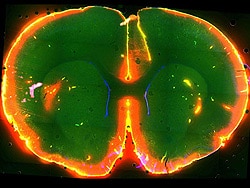
The researchers infused fluorescent dye into the cerebrospinal fluid (CSF) of mice and observed it flow through the brain. At the same time, they monitored electrical brain activity and wakefulness with electrocorticography (EcoG) and electromyography (EMG).
Dye flows through the brain of a sleeping mouse.Courtesy of Nedergaard Lab, University of Rochester Medical Center.
"In the sleeping brain, we found the CSF flushed into the brain very quickly and broadly," said Dr. Xie. "After half an hour, we woke the mice up by gently touching their tails, and injected another color of dye. But what we saw is that CSF barely flowed when the same mice were awake."
These results suggest that the awake brain may have more resistance to CSF influx, which leads to the assumption that the path of CSF flow into the brain is smaller in the awake brain, said Dr. Xie.
Next, the scientists inserted electrodes into the brain to directly measure the space between brain cells, and found that it increased by around 60% when the mice were asleep.
"Theoretically, big spaces lead to easier fluid influx," said Dr. Xie. "So we presumed that the clearance of the toxic protein between cells will become more efficient."
To test this assumption, they infused radio-labeled Aβ into the brain and measured how long it stayed in both the sleeping brain and the awake brain.
"We found Aβ disappeared 2-fold faster in the sleeping mice brains as compared with awake mice," noted Dr. Xie. "Based on this experiment, we can see that the sleeping brain is more capable of clearing out the toxic protein."
Technically, it might be relatively easy to study these processes in humans, possibly using magnetic resonance imaging. However, Dr. Xie said she does not know when human trials, which involve "a lot more concerns" than animal experiments, might come about.
"These results may have broad implications for multiple neurological disorders," said Jim Koenig, PhD, a program director at the National Institute of Neurological Disorders and Stroke (NINDS), which funded the study, in a statement. "This means the cells regulating the glymphatic system may be new targets for treating a range of disorders."
The study was funded by grants from the NINDS.
Science. 2013;342:373-377. Abstract

Wednesday, November 6, 2013

Dermatologists Release Choosing Wisely Recommendations


Medscape Medical News   Larry Hand
October 30, 2013
The American Academy of Dermatologists (AAD) has released its list of commonly prescribed skin tests and procedures that may not be necessary. The evidence-based recommendations, part of the American Board of Internal Medicine Foundation's Choosing Wisely campaign, are:
1. "Don't prescribe oral antifungal therapy for suspected nail fungus without confirmation of a fungal infection." About half of the suspected cases of fungal infection turn out not to be.
2. "Don't perform sentinel lymph node biopsy or other diagnostic tests for the evaluation of early, thin melanoma because they do not improve survival." Patients with this type of melanoma have a 5-year survival rate of 97% and carry a low risk of the cancer spreading elsewhere.
3. "Don't treat uncomplicated, non-melanoma skin cancer less than one centimetre in size on the trunk and extremities with Mohs micrographic surgery." The risks of this type of surgery are greater than the benefits for some locations.
4. "Don't use oral antibiotics for treatment of atopic dermatitis unless there is clinical evidence of infection." Antibiotics have not been shown to reduce signs, symptoms, or severity of uninfected atopic dermatitis.
5. "Don't routinely use topical antibiotics on a surgical wound." Topical antibiotics have not been shown to reduce the rate of infection for a clean surgical wound more than nonantibiotic ointment or no ointment. However, this recommendation does not apply to nonsurgical wounds such as scraped knees or household cuts or abrasions.
Save Time and Money